
Framing Complex Systems
for Responsible Institutional Action
Framing Complex
Systems for
Responsible
Institutional Action
Elite Growth Advisors helps institutions understand complex systems, make better decisions, and act responsibly. We combine Imaginative Framing, carefully documented observation of nature and place, and cross-border learning to clarify important questions, identify relationships and constraints, and develop practical designs, implementation pathways, and reusable institutional tools.
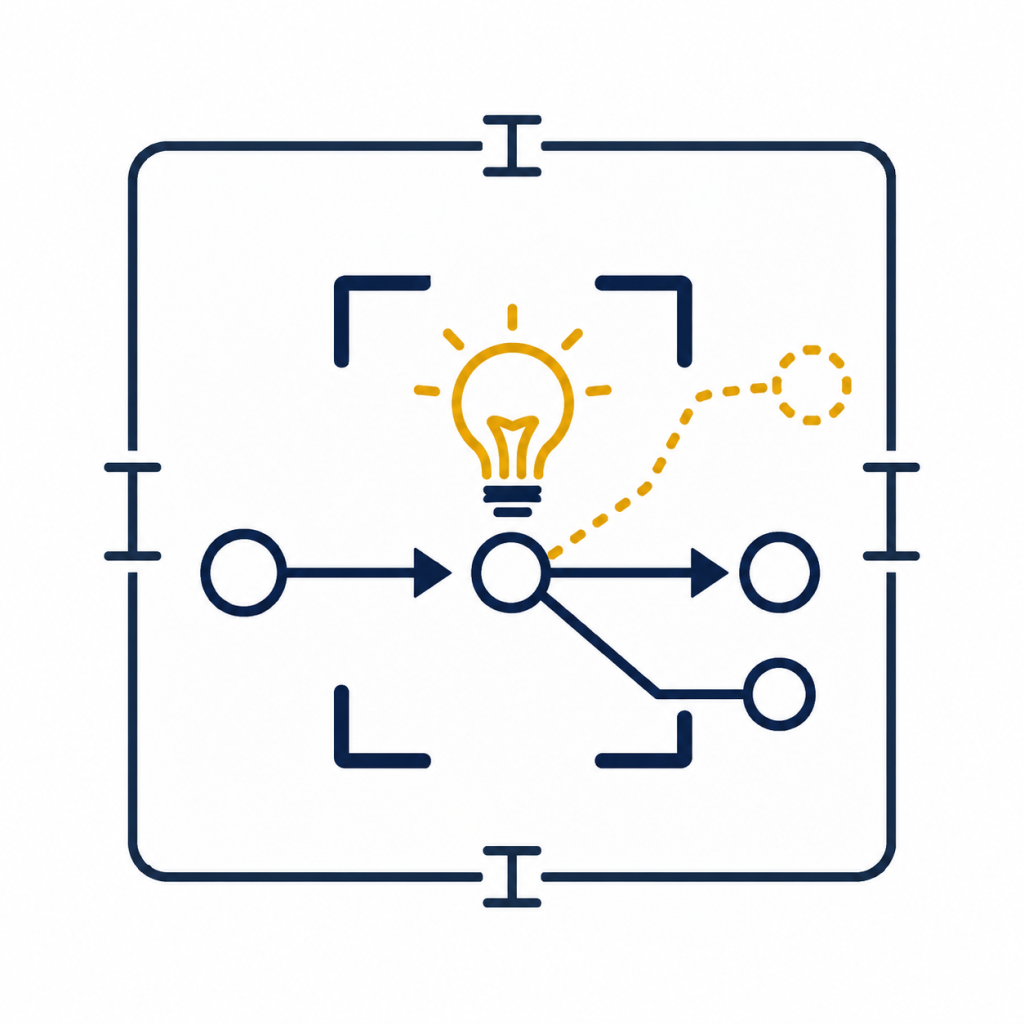
From Systems Framing to Governed Health-Financing Architecture
Elite Growth Advisors’ broader systems-framing and institutional-design capability is applied through a clear three-part architecture. EGA frames and designs the system; GLOHBX provides the proof-before-payment operating model; and Global Health Catalyst coordinates implementation, institutional partnerships, and responsible scale.
Elite Growth Advisors
Systems Framing and Design
Draws on Imaginative Framing, Nature as Systems Intelligence, and Bridging Borders to clarify the institutional question, examine causal relationships and constraints, test counterfactual failure paths, and design governed architectures and implementation pathways.
GLOHBX
Proof-Before-Payment Operating Model
Converts the design into governed operating logic connecting restricted purpose, authorization, service delivery, evidence review, acceptance, reconciliation, sponsor proof, and controlled payability.
Global Health Catalyst (GHC)
Operator
Coordinates country engagement, institutional partnerships, sponsor activation, technical collaboration, operational readiness, and responsible scale.
Designing GLOHBX Around the Conditions for Responsible Payment
Elite Growth Advisors applied Imaginative Framing to a fundamental health-financing question:
What must be true before health-directed value can responsibly become payment?
The answer requires more than moving money. A credible pathway must establish who or what is authorized, what service or outcome is intended, what evidence is required, who may review and accept that evidence, how exceptions are handled, what fiscal and governance conditions apply, and when the pathway becomes payment-ready.
GLOHBX therefore reframes healthcare financing as a governed chain of authorization, service delivery, evidence, review, acceptance, closeout, and controlled payability.
The Bridging Borders Approach
Elite Growth Advisors uses an iterative approach to move global knowledge toward locally governed, testable, and scalable implementation.
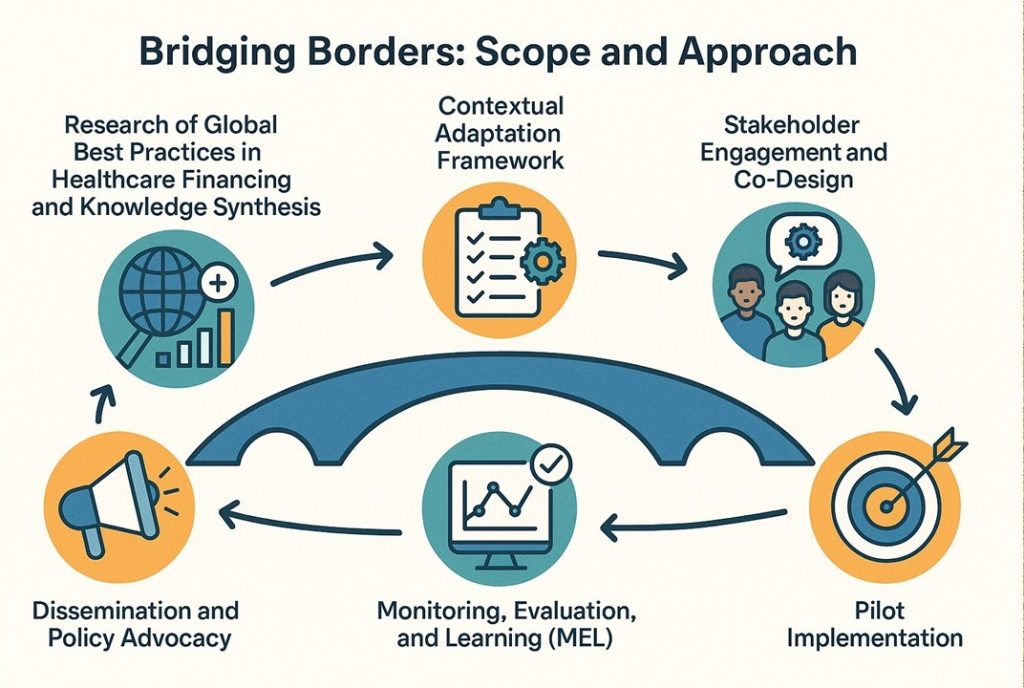
1. Research and Knowledge Synthesis
Examine global practices, financing models, implementation experience, and available evidence to identify transferable lessons and unresolved risks.
2. Contextual Adaptation
Translate global insights into frameworks that reflect local authority, clinical workflows, institutional capacity, regulation, culture, technology, and financing conditions.
3. Stakeholder Engagement and Co-Design
Engage governments, health institutions, communities, sponsors, technical partners, diaspora organizations, faith-based organizations, and other stakeholders in defining roles, safeguards, and implementation requirements.
4. Pilot Implementation
Test the proposed model through bounded pilots and controlled demonstrations that reveal assumptions, readiness gaps, exception pathways, and evidence requirements before scale.
5. Monitoring, Evaluation, Learning, and Dissemination
Use implementation evidence to improve the model, strengthen institutional learning, support policy dialogue, build partner confidence, and inform responsible expansion.
Imaginative Framing
Elite Growth Advisors applies imaginative framing to convert ambitious health-financing ideas into governed, testable, and implementable systems. The method examines causality, counterfactuals, and real-world constraints before a model is advanced toward implementation or scale.
Causality
Define the cause-and-effect chain that must connect resources, authorization, action, evidence, institutional decisions, and intended health outcomes.
The design asks: What must happen, in what sequence, and under whose authority before support can become an accepted result or payment-ready event?
Counterfactuals
Examine what could fail, remain unproven, be duplicated, be manipulated, exclude important stakeholders, or create unintended consequences.
The design asks: What would the pathway look like if an expected condition were absent, an evidence item conflicted, or a control failed?
Constraints
Design within actual clinical, institutional, fiscal, regulatory, technological, connectivity, and workforce limits rather than assuming ideal operating conditions.
The design asks: What can be implemented responsibly with the authority, infrastructure, data, capacity, and resources that are genuinely available?
Together, causality, counterfactuals, and constraints help Elite Growth Advisors transform complex concepts into systems whose assumptions, controls, authorities, evidence requirements, and implementation boundaries can be examined before scale.
Nature, Health, and Sustainable Growth
Elite Growth Advisors helps organizations translate documented observations of nature into practical insights about resilience, continuity, stewardship, prevention, adaptation, and sustainable growth.
Elite Growth Advisors uses photography, ecological observation, and technology to explore what birds, fauna, and natural ecosystems can teach us about healthy living, resilient institutions, and sustainable growth. By translating carefully documented natural patterns into accessible systems insights, this work supports health education, leadership, prevention, community engagement, and stronger conversations about the environmental and social conditions that shape wellbeing.
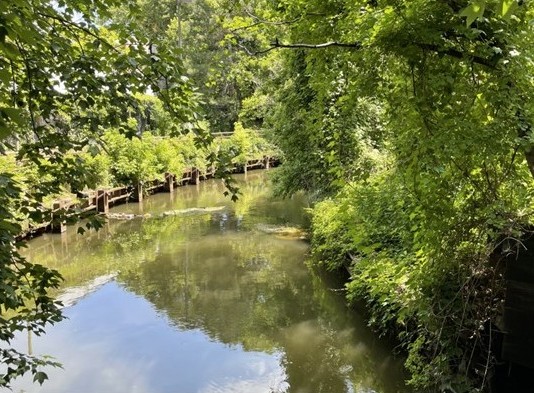
D&R Canal, Trenton
Photographed at: Trenton, New Jersey, USA
Date observed: June 29, 2026
Visible and audible observation: A tree-lined section of the D&R Canal curves between densely vegetated banks, with reflected sky and urban retaining structures visible along the waterway. Multiple bird vocalizations can be heard from the surrounding canopy.
This photographic record provides a starting point for examining continuity, stewardship, public access, habitat, and the relationship between natural and built systems. It supports systems questions about what must be monitored, maintained, and protected so that a shared corridor remains functional over time.
Evidence boundary: The photograph does not establish water quality, overall ecological health, or a causal relationship between the canal and community health outcomes.
Observe
Document birds, fauna, habitats, relationships, movement, adaptation, and environmental change through photography, field observation, and appropriate technology. Record what is visibly occurring before assigning meaning or drawing a wider systems conclusion.
Interpret
Add ecological context to the documented observation and identify the relationships, adaptations, signals, or recurring patterns it may illustrate. Distinguish what is directly observed from what is inferred, and verify scientific claims using credible sources.
Translate
Convert the documented observation and verified ecological context into accessible health, leadership, sustainability, and systems-learning resources. Use the insight to frame useful questions, explain complex relationships, and support responsible discussion and action.
From Observation to Reusable Insight
Each documented observation can move through a repeatable workflow that preserves ecological context, distinguishes evidence from interpretation, and converts one photographic record into multiple useful learning, communication, and decision-support assets.
1. Capture
Photograph or record the subject, behavior, habitat, date, location context, and relevant field conditions. Preserve the original image and basic metadata as the source record.
2. Contextualize
Add species, habitat, behavior, and environmental context to the source record. Verify factual claims, note uncertainties, and distinguish direct observation from interpretation.
3. Frame
Identify the systems principle the observation may illustrate and the health, leadership, or sustainability question it helps explore. State where the analogy is useful and where its limits begin.
4. Produce
Convert the observation into reusable outputs such as an insight card, field note, presentation slide, article, short video, workshop prompt, or professional brief.
5. Review and Reuse
Confirm scientific accuracy, image rights, accessibility, and appropriate interpretation. Archive the approved photograph, metadata, and outputs in a tagged library for future adaptation and reuse.
Reusable Outputs and Artifacts
A single verified photographic observation can support a family of polished, reusable resources for education, communication, leadership, partnership development, and health-systems learning. Each output retains a traceable connection to the original photograph, ecological context, interpretation, and review record.
Nature-to-Health Insight Cards
One-page visual resources combining a photograph, ecological context, observed pattern, health- or systems-learning insight, discussion question, and evidence note.
Bridging Borders Field Notes
Short illustrated narratives connecting a documented nature observation to a question about health, leadership, resilience, prevention, stewardship, or sustainable growth.
Living Systems Briefs
Two- to four-page professional resources that combine photography, ecological context, systems interpretation, evidence notes, and practical implications for institutions and partners.
Digital Learning Gallery
A searchable and accessible collection of photographs, field observations, systems insights, learning questions, related resources, and reusable visual assets.
Photography captures the signal. Technology organizes the evidence. Imaginative framing translates observation into useful questions, learning, and action.
BEGIN WITH THE SYSTEMS QUESTION
Engage Before Decisions Harden
Elite Growth Advisors helps institutional leaders clarify important questions, test assumptions, identify relationships and constraints, and determine practical options before resources and commitments become difficult to redirect.
Engage us early, before decisions harden, to surface risks and constraints, sharpen decision-making, and move insight into responsible action faster.